
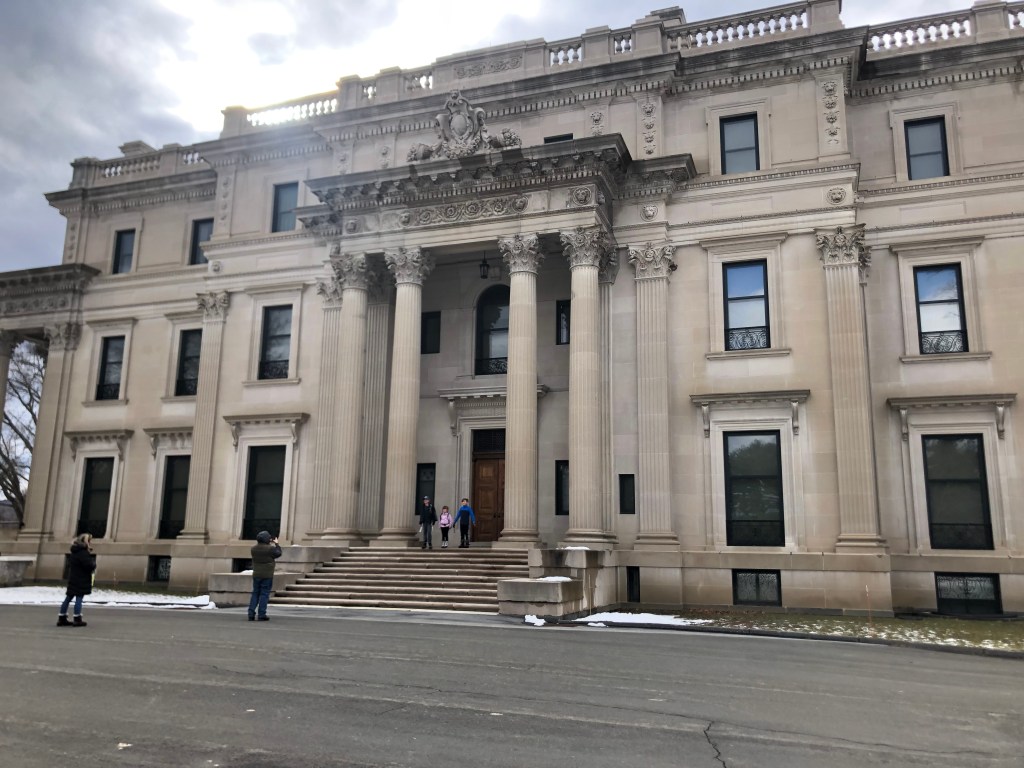
An estate with fountains, gilded statuary, a colonnade…does this sound like France or Italy? No, it’s the Nemours Estate in Wilmington, Delaware!
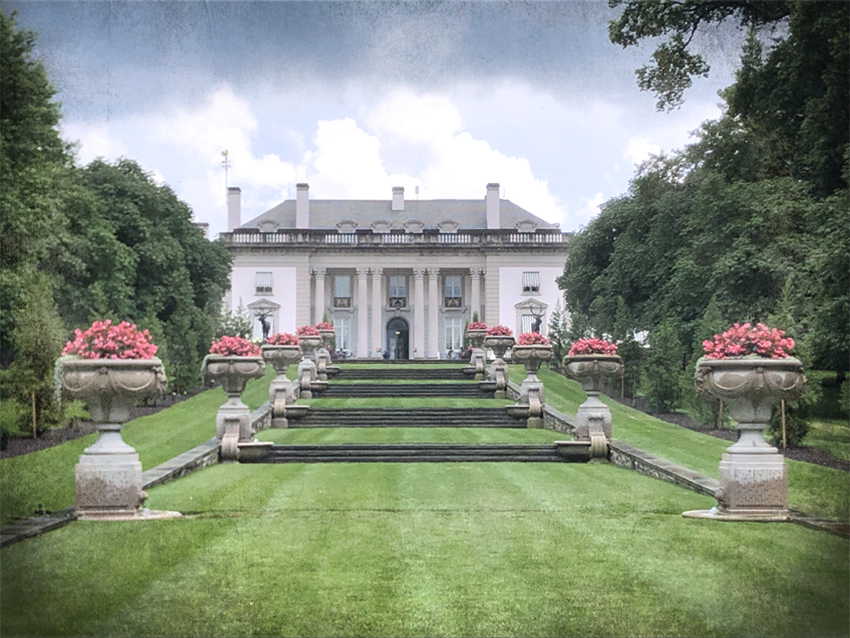
Nemours Estate (1909-10) was built for Alfred I. DuPont. Alfred’s great-great grandfather had fled France in the wake of the French Revolution (narrowly escaping the guillotine!) and come to the United States. The family began to manufacture gunpowder, which created their fortune in the 1800s.
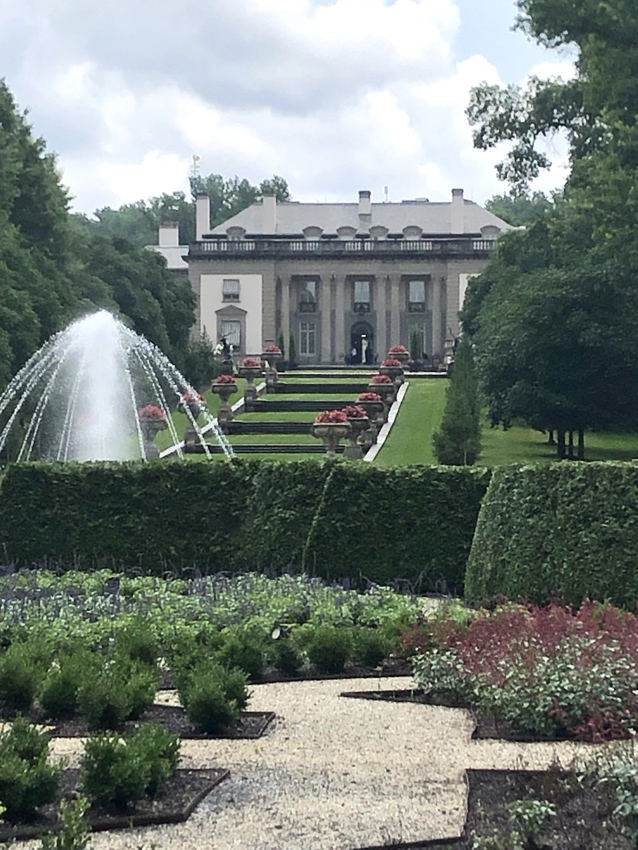
In 1907, after an extremely bitter divorce from his first wife, Alfred married divorcee Alicia Bradford Maddox. Alicia loved Paris and French style. It’s believed that Alfred commissioned the French-style home to win over his new bride. Designed by the famous firm of Carrere and Hastings, the mansion was completed in 1910.

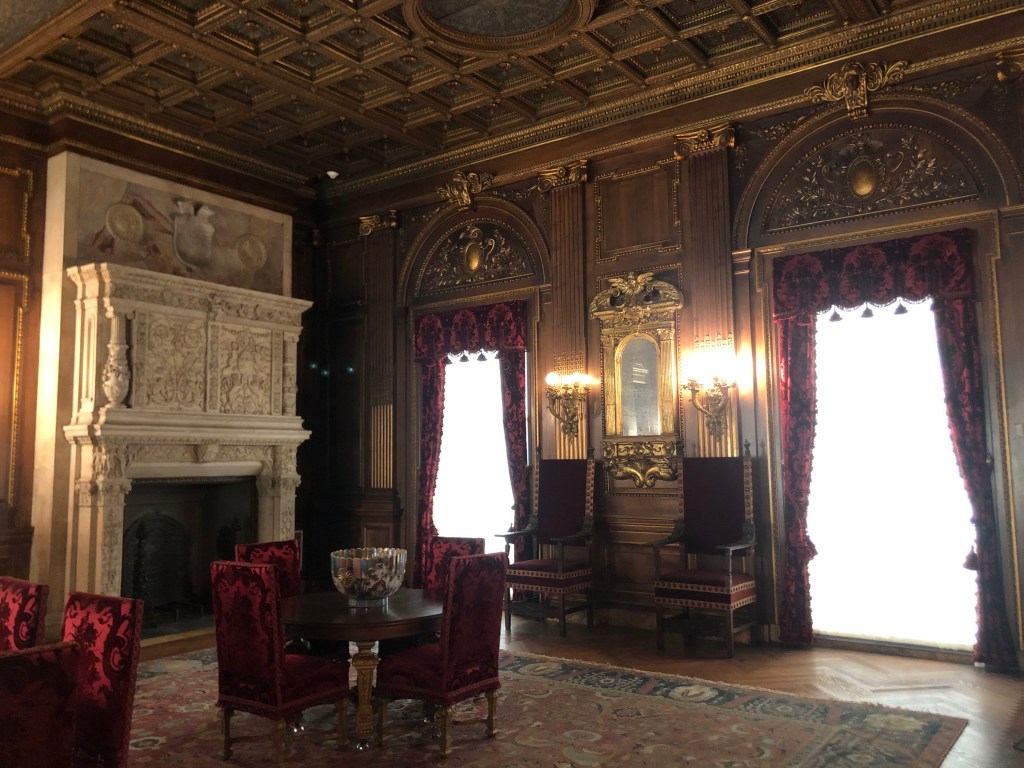
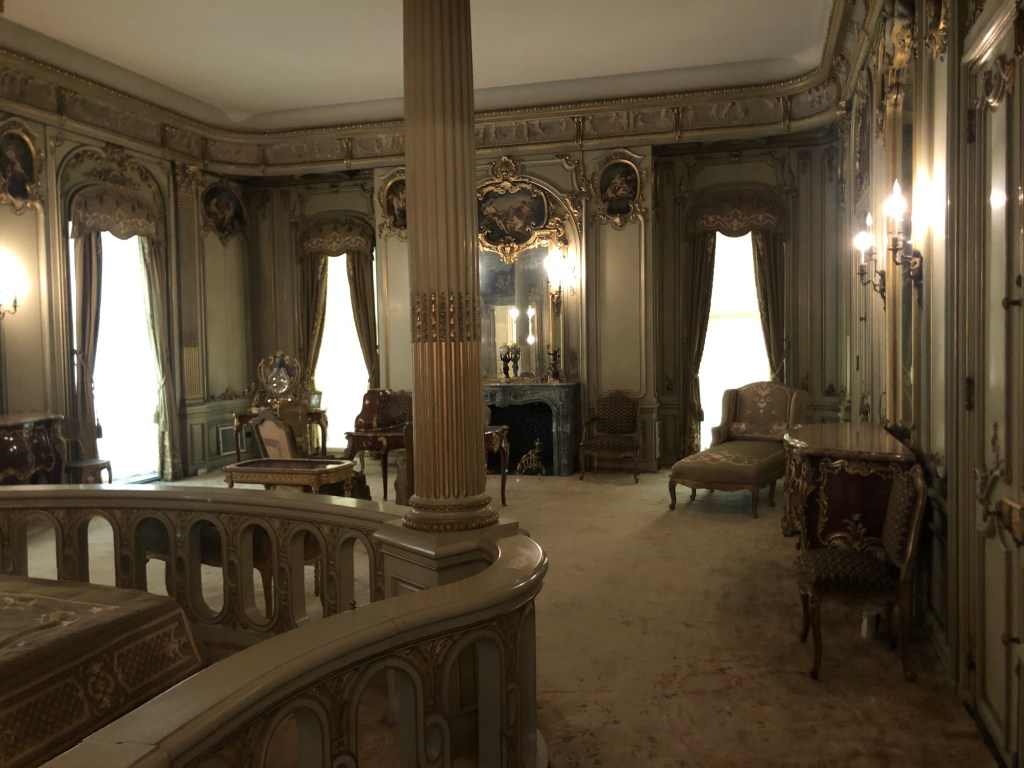
Here is the impressive Reception Room, with its marble floor and coffered ceiling.
The rest of Alfred’s family, already disapproving of his divorce and remarriage, were startled by the extravagance of the house. They and other members of society gossiped about Alicia and her influence on Alfred.
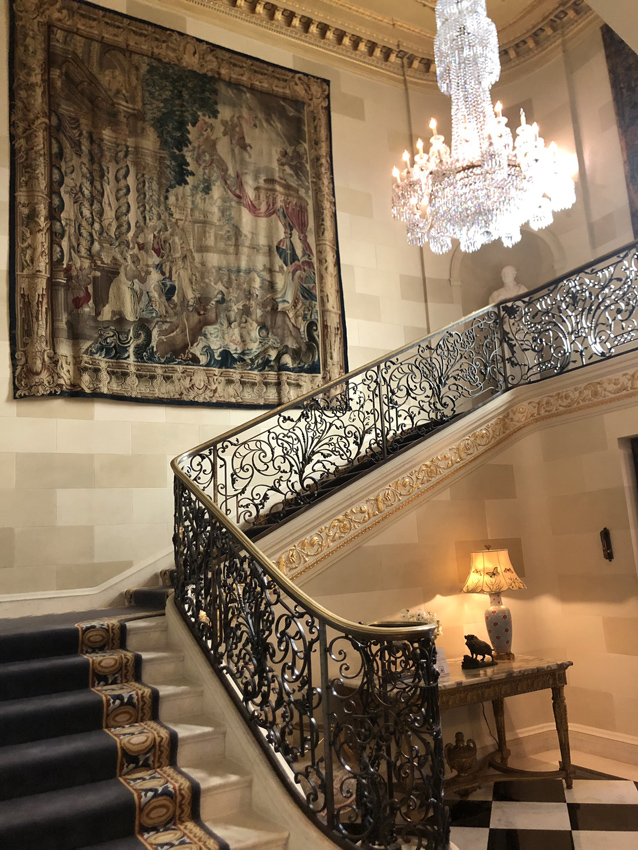
Here you can see the sweeping staircase. The wrought iron decoration was salvaged from a European house.
Unfortunately, for all its magnificence, the house didn’t have its intended effect on Alicia. It appears she never loved Alfred to the extent that he loved her, though he mourned her when she died unexpectedly in 1920.
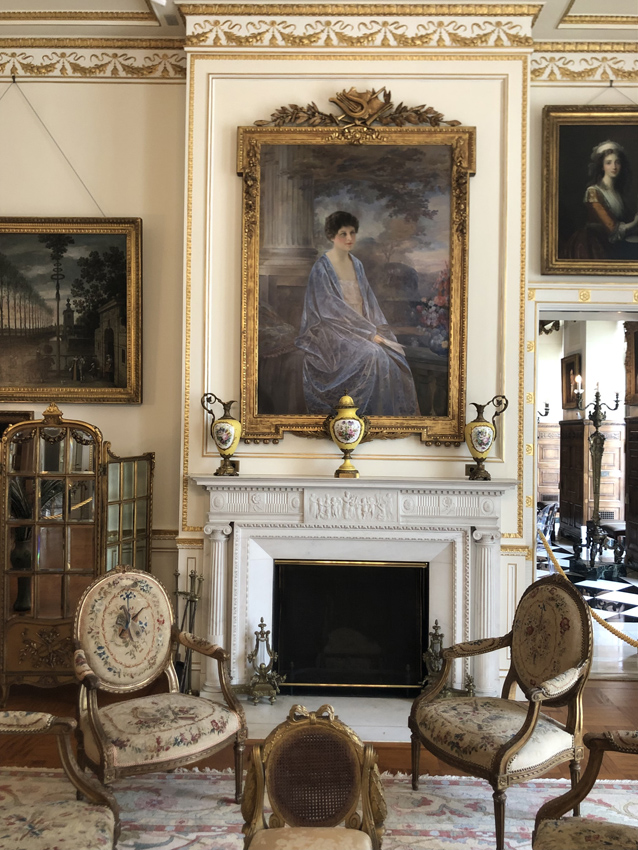
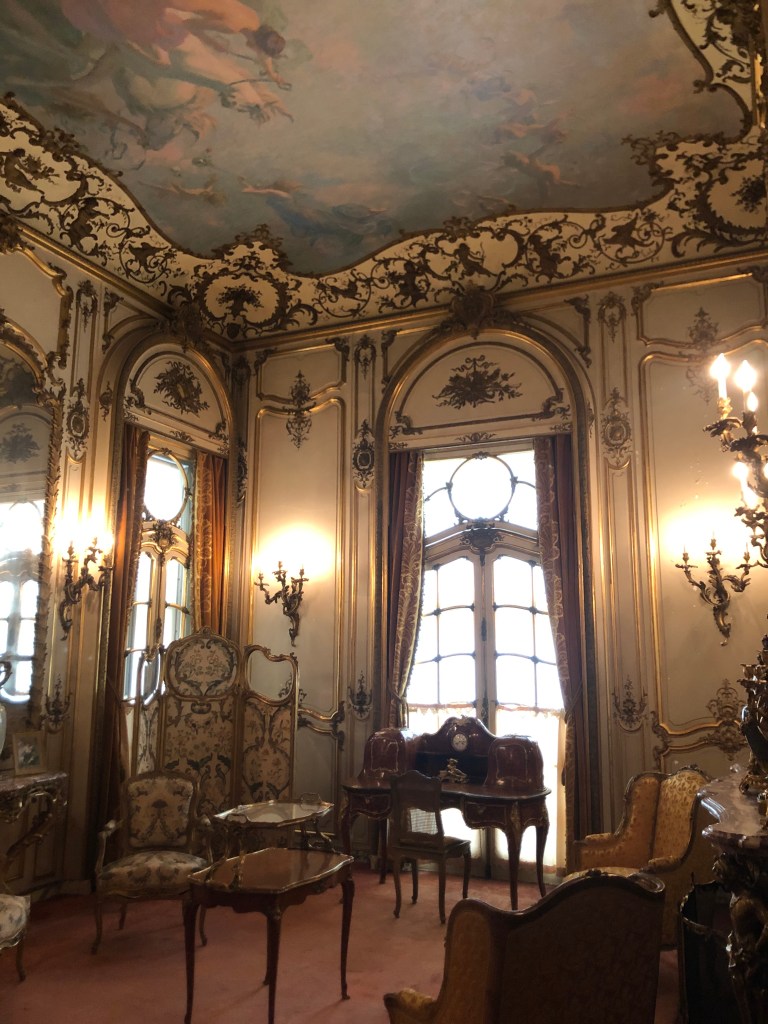
This is the Music Room, in an elegant Neo-Classical style, in gold and white.
In 1921, Alfred married Jessie Ball. She had been working as a schoolteacher, though she came from an old Virginia family. She was considerable younger than him, but this marriage turned out to be a happy one. Jessie’s portrait is hanging over the fireplace in the photo above.
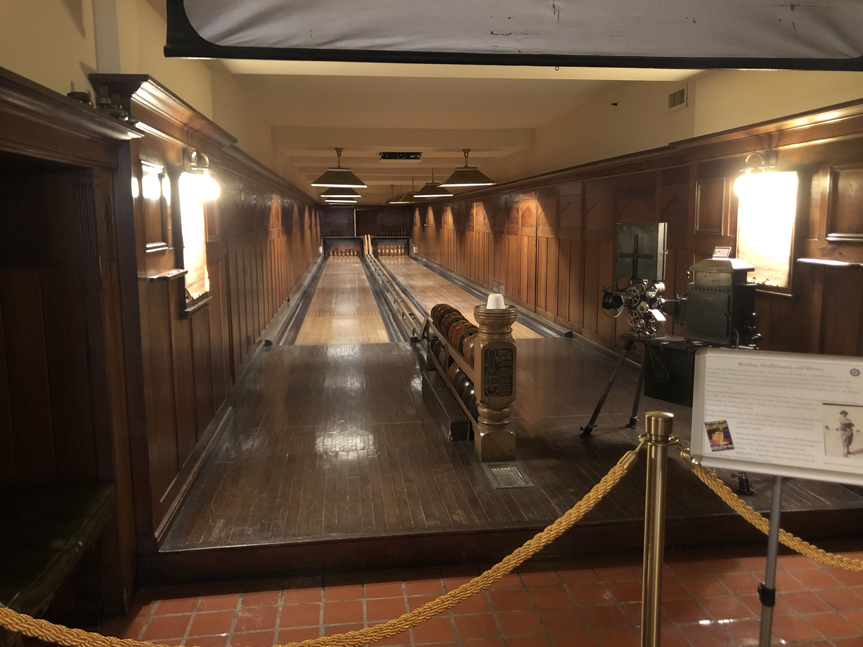
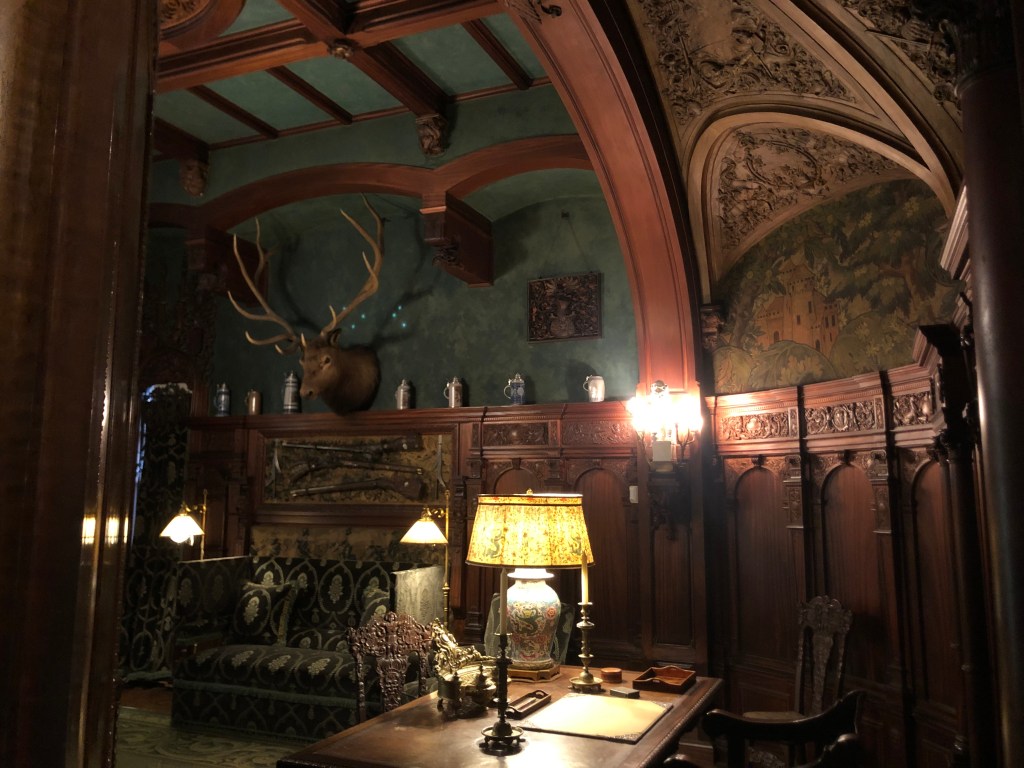
Even though Nemours was built in the style of a 1700s chateau, it boasted every convenience for DuPont and his guests. It included an ice making machine, projector and movie screen, and a private bowling alley!
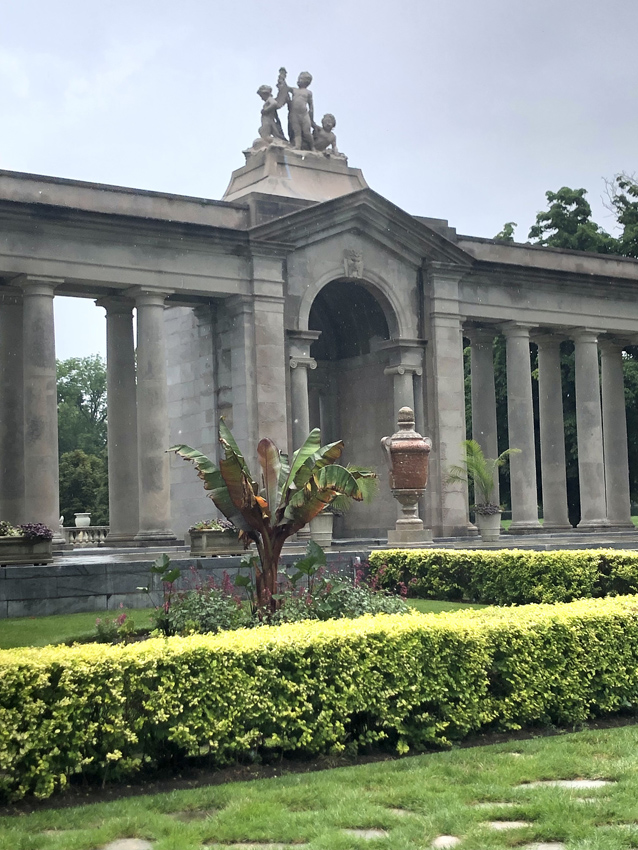
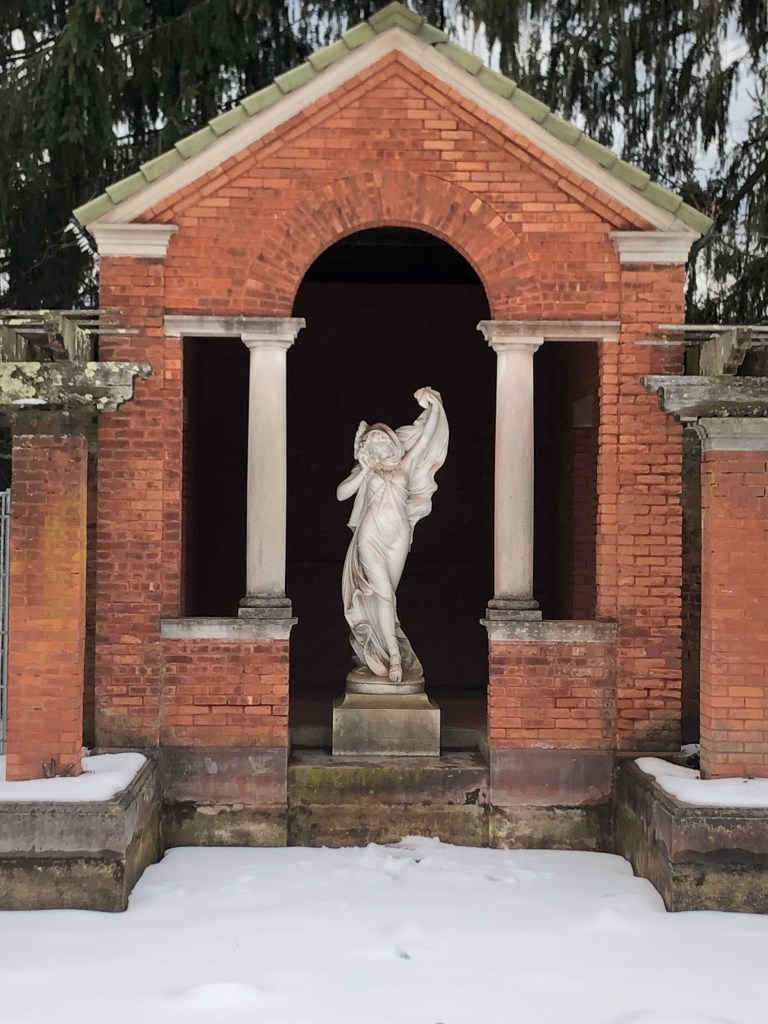
The gardens at Nemours are laid out in a formal French style, with a breathtaking vista that includes fountains, statuary, and a monumental colonnade (seen above). The colonnade includes relief portraits of Alfred’s great-great grandfather and grandfather.
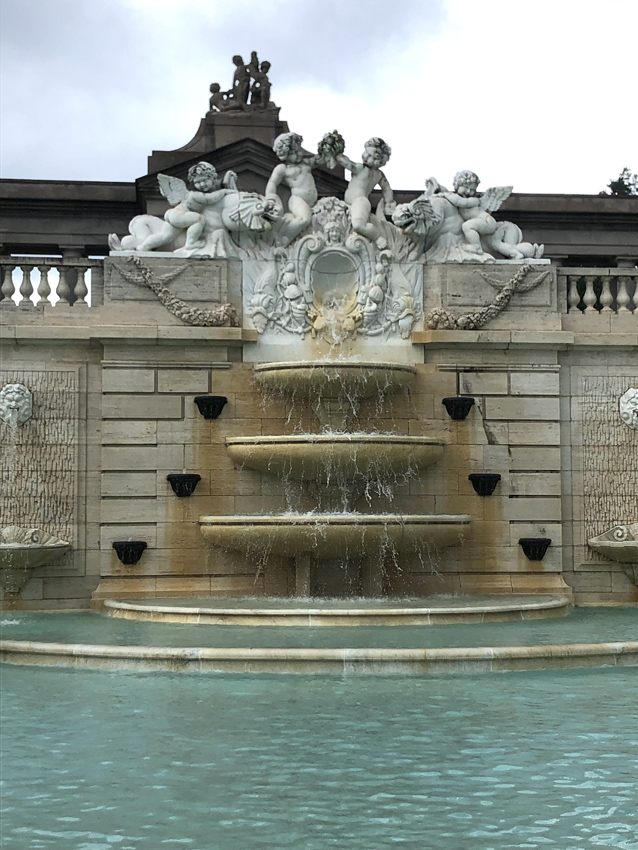
This spectacular fountain, with its ornately carved cherubs, is typical of the style of the gardens. But despite its grand scale, the garden is very harmonious, and extremely pleasant to walk through.
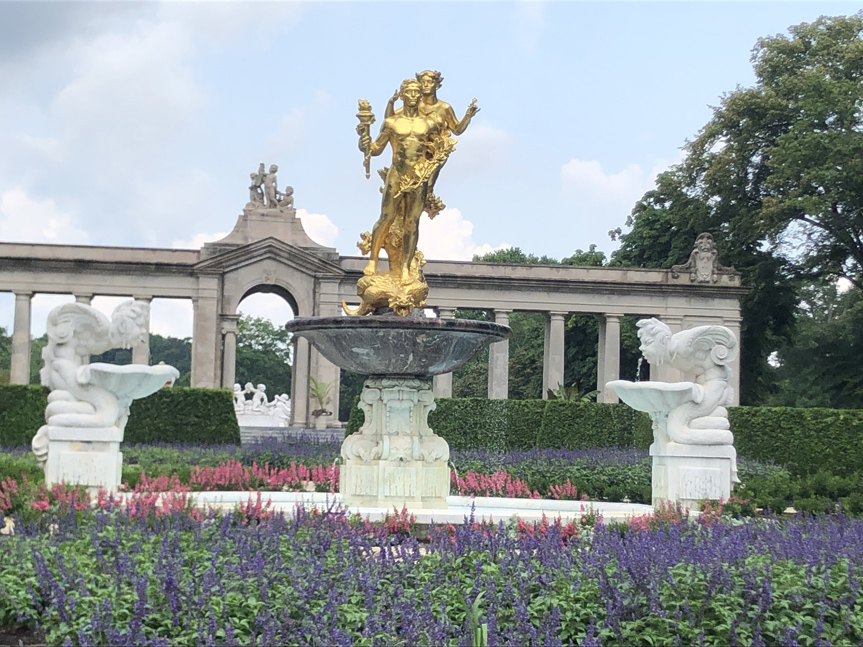
This sculpture, “Achievement,” is covered in real gold leaf! Alfred commissioned it to express “what a man can do with an excellent partner,” a tribute to his wife Jessie. The female figure, said to be modeled upon her likeness, whispers into the ear of the man as he strides forward.
Alfred is buried with Jessie on the grounds of the estate. Just outside the entrance to the property, you can see the Nemours Children’s Hospital…Alfred donated money and land from the estate for the creation of the hospital.
I highly recommend a visit to Nemours! The mansion and gardens are as grand and colorful as Alfred DuPont’s personality, and it’s fascinating to learn about him and his family. The estate is also one of the most beautiful historic homes I’ve visited, with its carefully preserved interiors and lovingly tended gardens. The estate is within driving distance of New Jersey and Pennsylvania…or you can take the Amtrak train to Wilmington. From the train station, you can either take a taxi, or use the DART bus (Route 28), which stops across the road from the mansion at the Children’s Hospital.
To read more about Alfred I. DuPont and Nemours Estate, read Nemours: A Portrait of Alfred I. DuPont’s House by Dwight Young and Grace Gary. It’s filled with historical information and beautiful photographs! (I referred to the book for background when writing this blog post.)
 JoAnn's Imagined Past