Have you ever dreamed about spending the night in a castle? A castle with turrets, gargoyles, and suits of armor? Maybe you think you’d have to travel to England or France…and that the price would be steep. Well, you can have that experience in a unique hotel that’s only a little over three hours drive from New York!
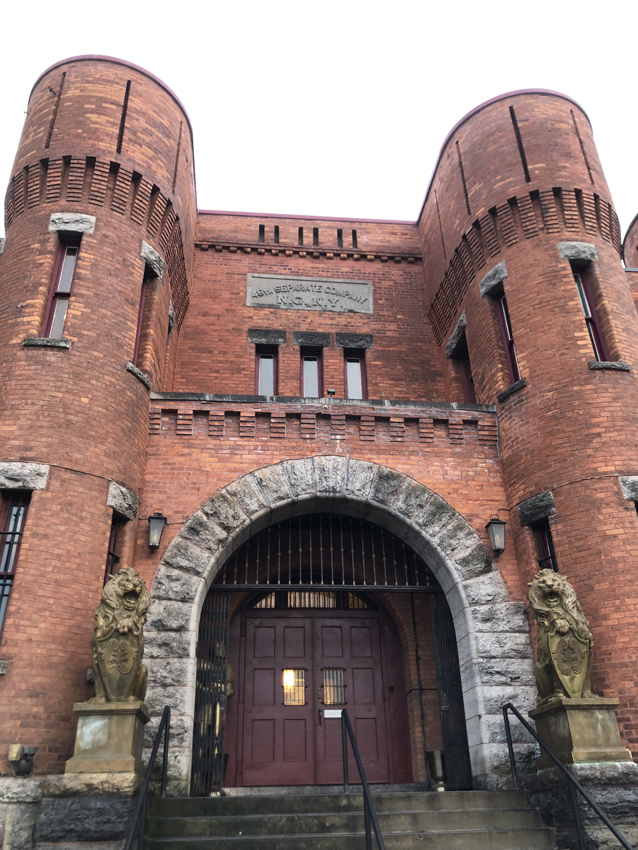
This is Amsterdam Castle, located in the small town of Amsterdam, NY. The building was originally designed by Isaac Perry, one of the architects who worked on the capitol building in Albany. Built in 1895, it originally served as an armory. After it was decommissioned, it passed into private hands and was transformed into a hotel.
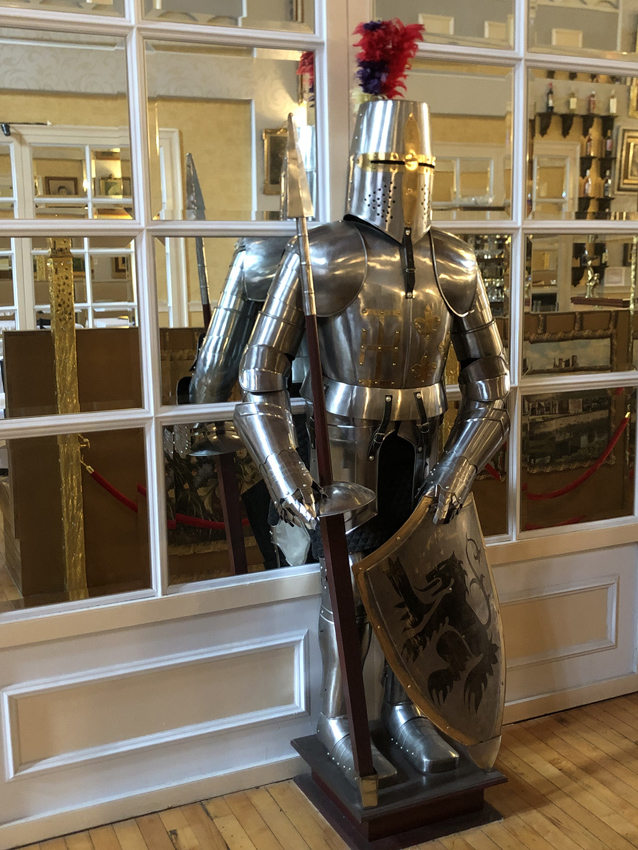
The hotel is decorated in a whimsical, medieval-inspired style. There are suits of armor:
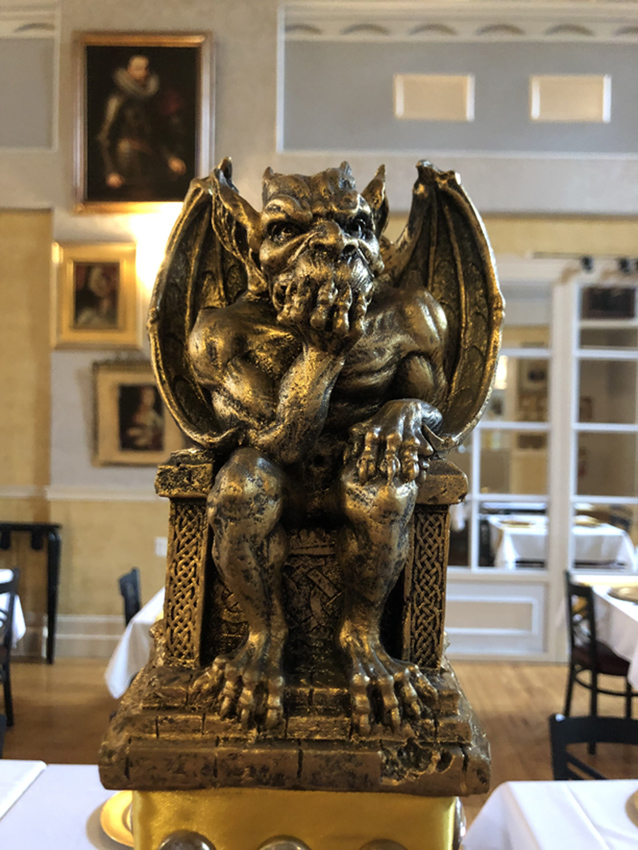
And gargoyles:
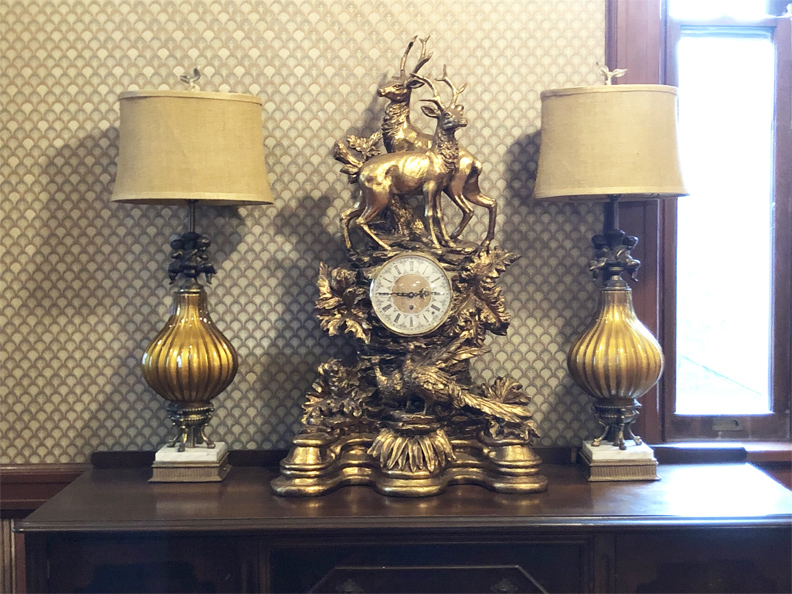
And there are sitting rooms with elegant antique furniture, clocks, and lamps…
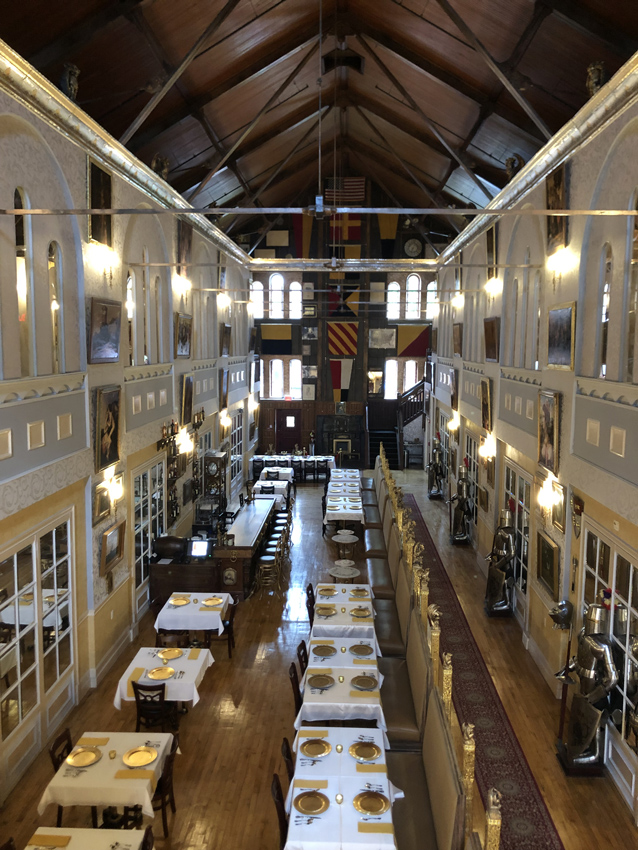
The highlight of the castle is the Great Hall, which is created from the armor’s former drill hall, and has its original high ceiling:
The Great Hall houses a bar, and a restaurant, the latter open on Friday and Saturday evenings.
You can view a short video that I made about the hotel here:
Rooms at this unique hotel start at $122 a night (plus tax). As I mentioned, it’s within driving distance of New York, and is also reachable via Amtrak service.
The hotel is filled with fun nooks and crannies, and has colorful objects everywhere you look! If you love history and fanciful artwork, it’s your castle getaway!
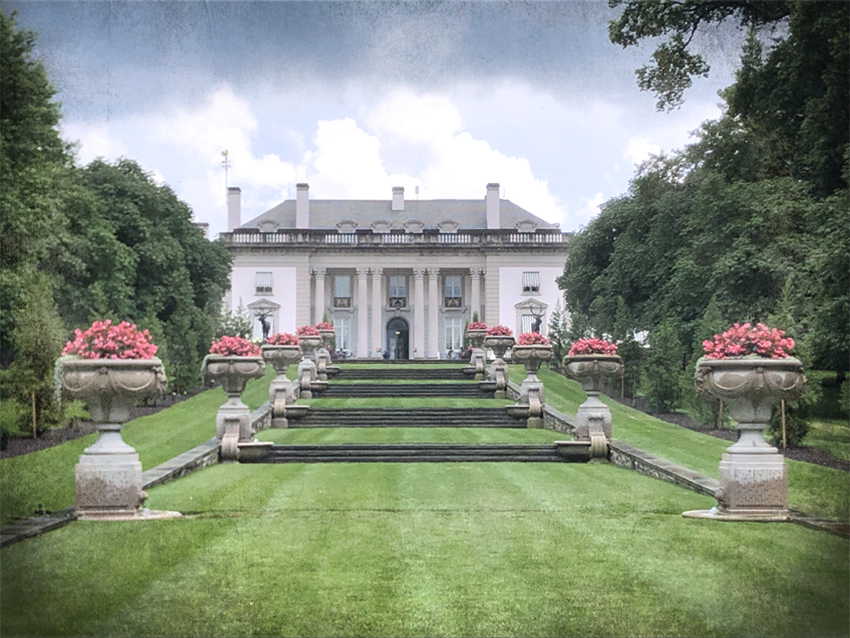
An estate with fountains, gilded statuary, a colonnade…does this sound like France or Italy? No, it’s the Nemours Estate in Wilmington, Delaware!
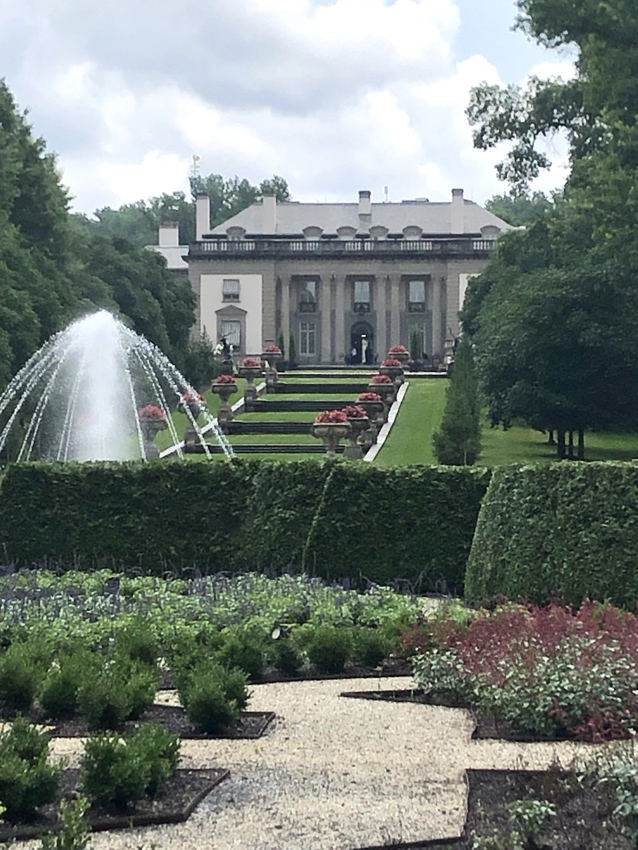
View of the mansion with a terraced walk with ornamental urns
Nemours Estate (1909-10) was built for Alfred I. DuPont. Alfred’s great-great grandfather had fled France in the wake of the French Revolution (narrowly escaping the guillotine!) and come to the United States. The family began to manufacture gunpowder, which created their fortune in the 1800s.
In 1907, after an extremely bitter divorce from his first wife, Alfred married divorcee Alicia Bradford Maddox. Alicia loved Paris and French style. It’s believed that Alfred commissioned the French-style home to win over his new bride. Designed by the famous firm of Carrere and Hastings, the mansion was completed in 1910.
Here is the impressive Reception Room, with its marble floor and coffered ceiling.
The rest of Alfred’s family, already disapproving of his divorce and remarriage, were startled by the extravagance of the house. They and other members of society gossiped about Alicia and her influence on Alfred.
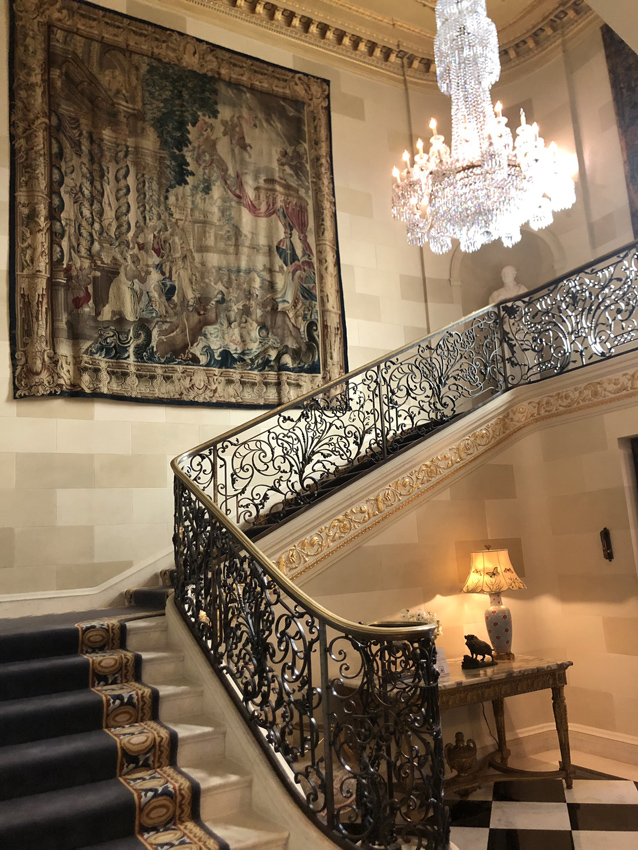
Here you can see the sweeping staircase. The wrought iron decoration was salvaged from a European house.
Unfortunately, for all its magnificence, the house didn’t have its intended effect on Alicia. It appears she never loved Alfred to the extent that he loved her, though he mourned her when she died unexpectedly in 1920.
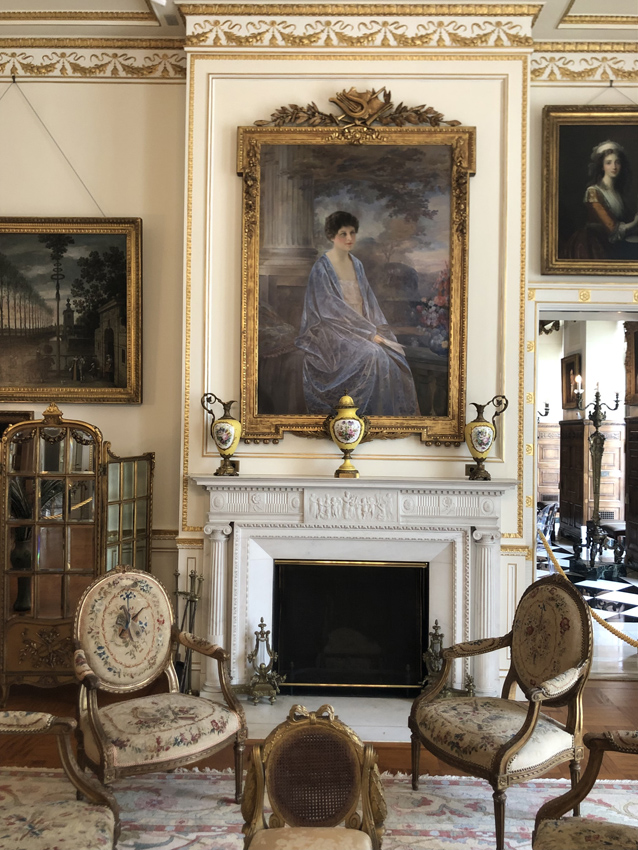
This is the Music Room, in an elegant Neo-Classical style, in gold and white.
In 1921, Alfred married Jessie Ball. She had been working as a schoolteacher, though she came from an old Virginia family. She was considerable younger than him, but this marriage turned out to be a happy one. Jessie’s portrait is hanging over the fireplace in the photo above.
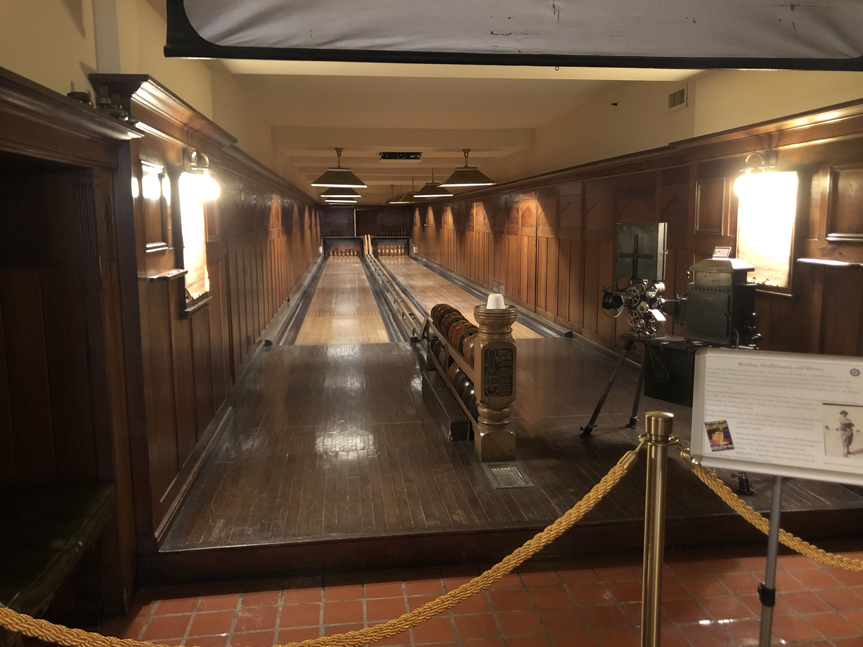
Even though Nemours was built in the style of a 1700s chateau, it boasted every convenience for DuPont and his guests. It included an ice making machine, projector and movie screen, and a private bowling alley!
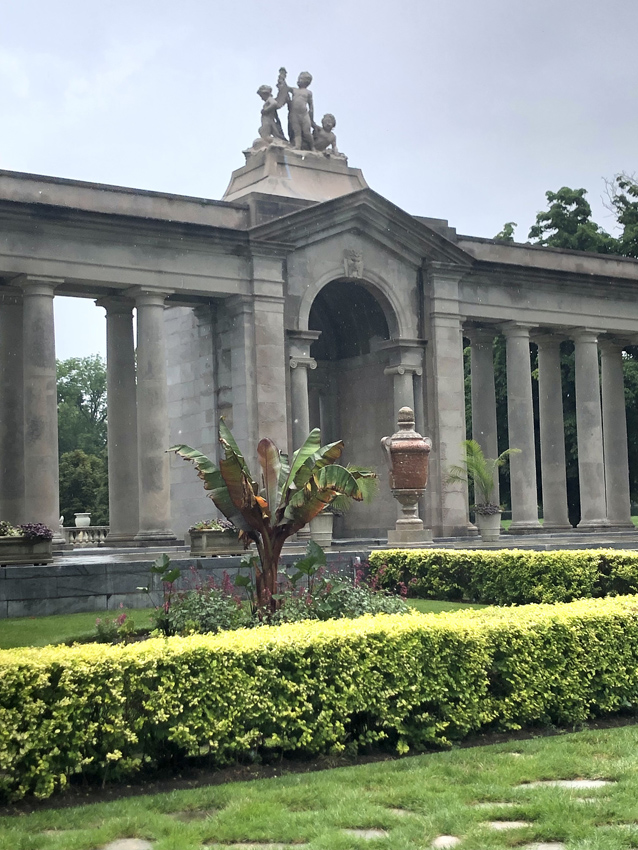
The gardens at Nemours are laid out in a formal French style, with a breathtaking vista that includes fountains, statuary, and a monumental colonnade (seen above). The colonnade includes relief portraits of Alfred’s great-great grandfather and grandfather.
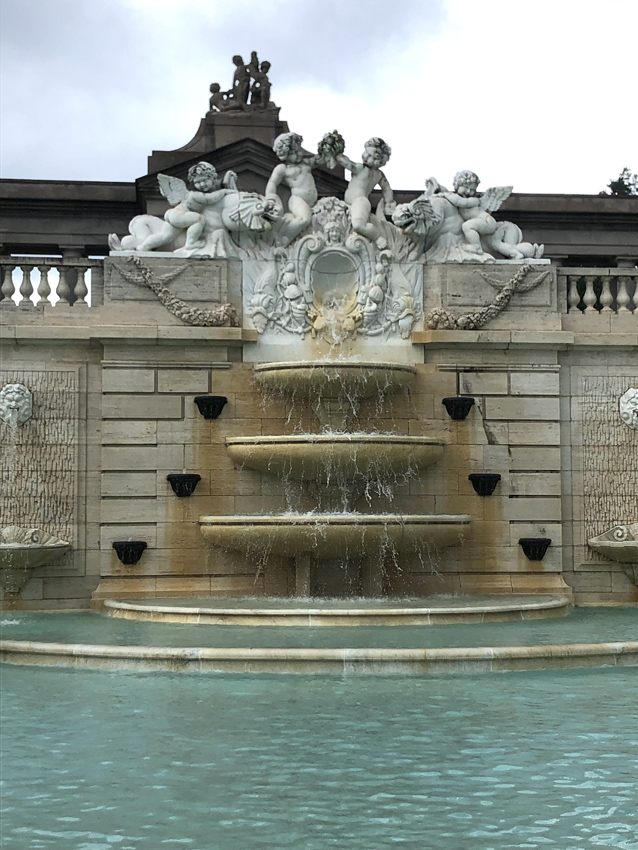
This spectacular fountain, with its ornately carved cherubs, is typical of the style of the gardens. But despite its grand scale, the garden is very harmonious, and extremely pleasant to walk through.
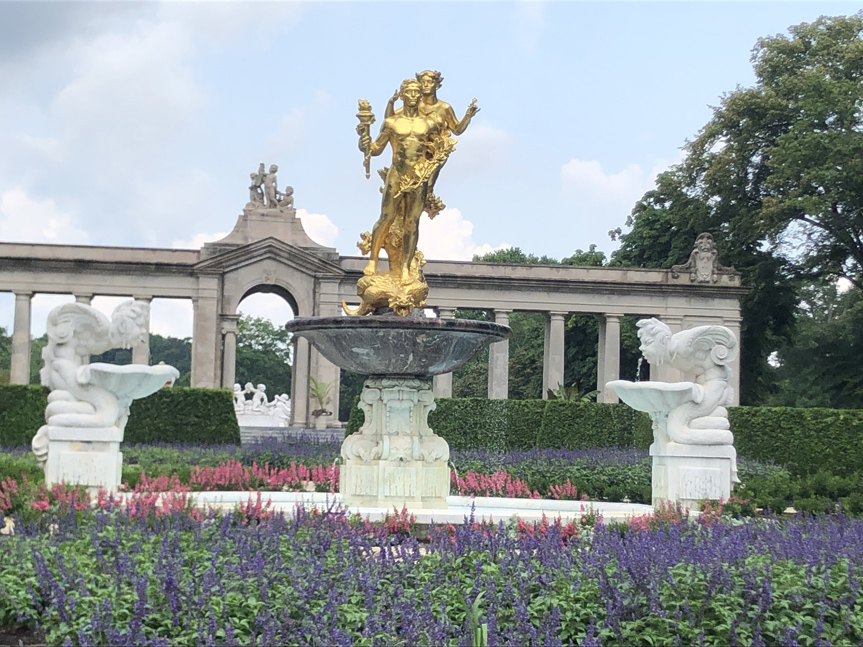
This sculpture, “Achievement,” is covered in real gold leaf! Alfred commissioned it to express “what a man can do with an excellent partner,” a tribute to his wife Jessie. The female figure, said to be modeled upon her likeness, whispers into the ear of the man as he strides forward.
Alfred is buried with Jessie on the grounds of the estate. Just outside the entrance to the property, you can see the Nemours Children’s Hospital…Alfred donated money and land from the estate for the creation of the hospital.
I highly recommend a visit to Nemours! The mansion and gardens are as grand and colorful as Alfred DuPont’s personality, and it’s fascinating to learn about him and his family. The estate is also one of the most beautiful historic homes I’ve visited, with its carefully preserved interiors and lovingly tended gardens. The estate is within driving distance of New Jersey and Pennsylvania…or you can take the Amtrak train to Wilmington. From the train station, you can either take a taxi, or use the DART bus (Route 28), which stops across the road from the mansion at the Children’s Hospital.
To read more about Alfred I. DuPont and Nemours Estate, read Nemours: A Portrait of AlfredI. DuPont’s House by Dwight Young and Grace Gary. It’s filled with historical information and beautiful photographs! (I referred to the book for background when writing this blog post.)
Doylestown, PA is home to an unexpected monument…a castle!
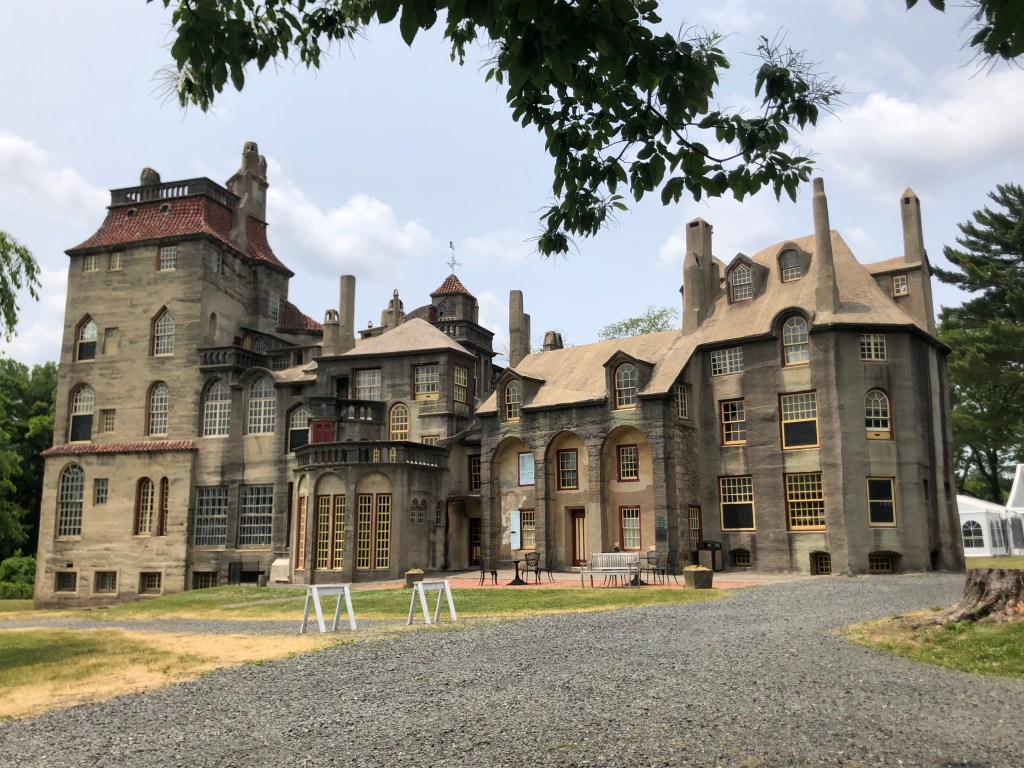
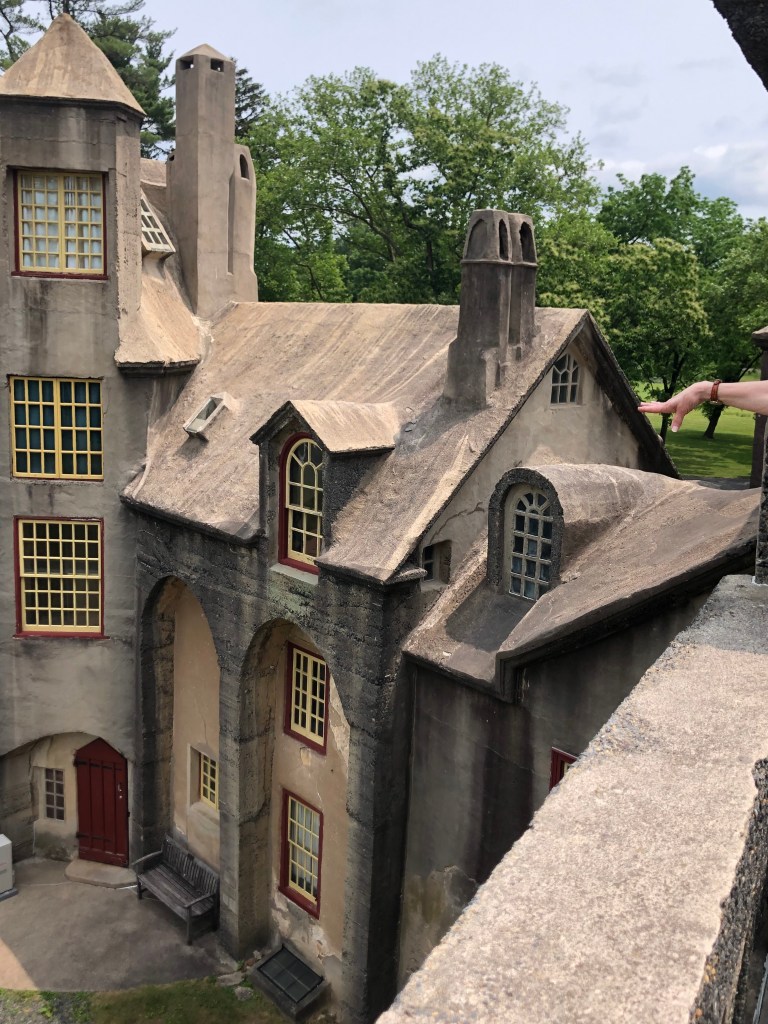
With its fanciful silhouette, chimneys, and towers, Fonthill looks like it could be a school for wizards in training…but it’s actually the brainchild of Henry Chapman Mercer.
Mercer was the son of a prominent local family. He was deeply interested in early trades and crafts, and apprenticed himself to a Pennsylvania German potter. He designed and collected ceramic tiles, founding the Moravian Pottery and Tile Works in 1898 (located just next door).
in 1908, Mercer started building Fonthill, which was intended to be both his home and a showcase for his vast collection of tiles. He was not trained as an architect, but drew inspiration from his extensive travels to sites around the world.
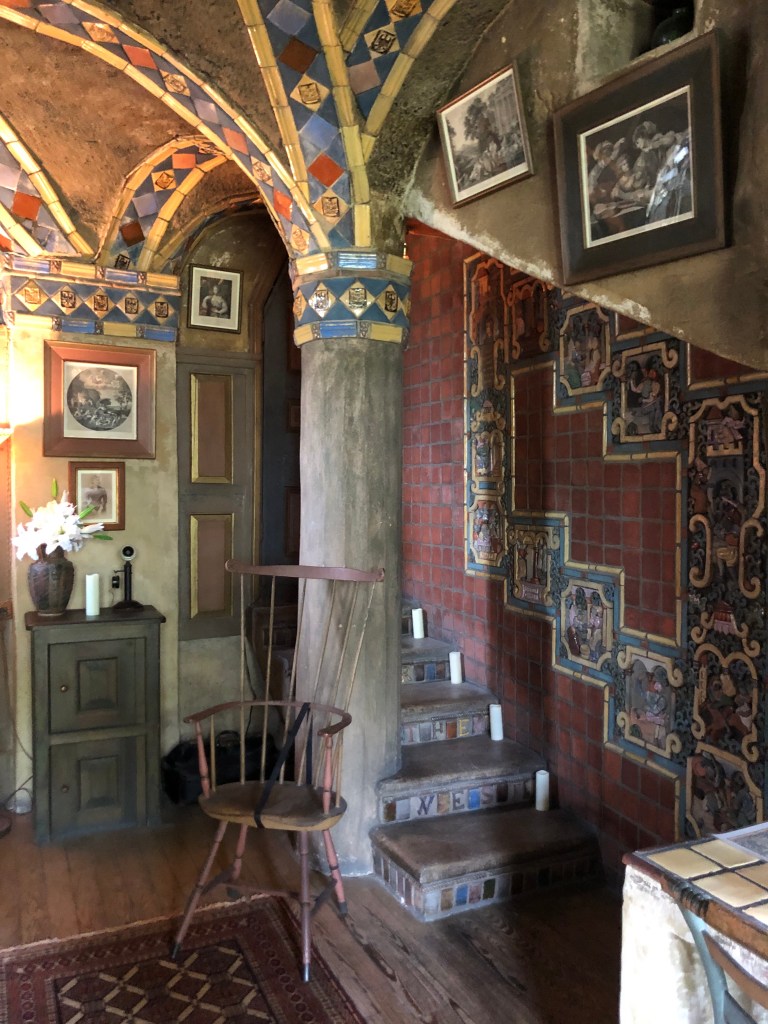
The interior recalls styles of the past, with pillars and vaulted ceilings. The layout seems to follow its own logic, a maze of rooms connected by corridors, winding stairs, and secret nooks around every corner.
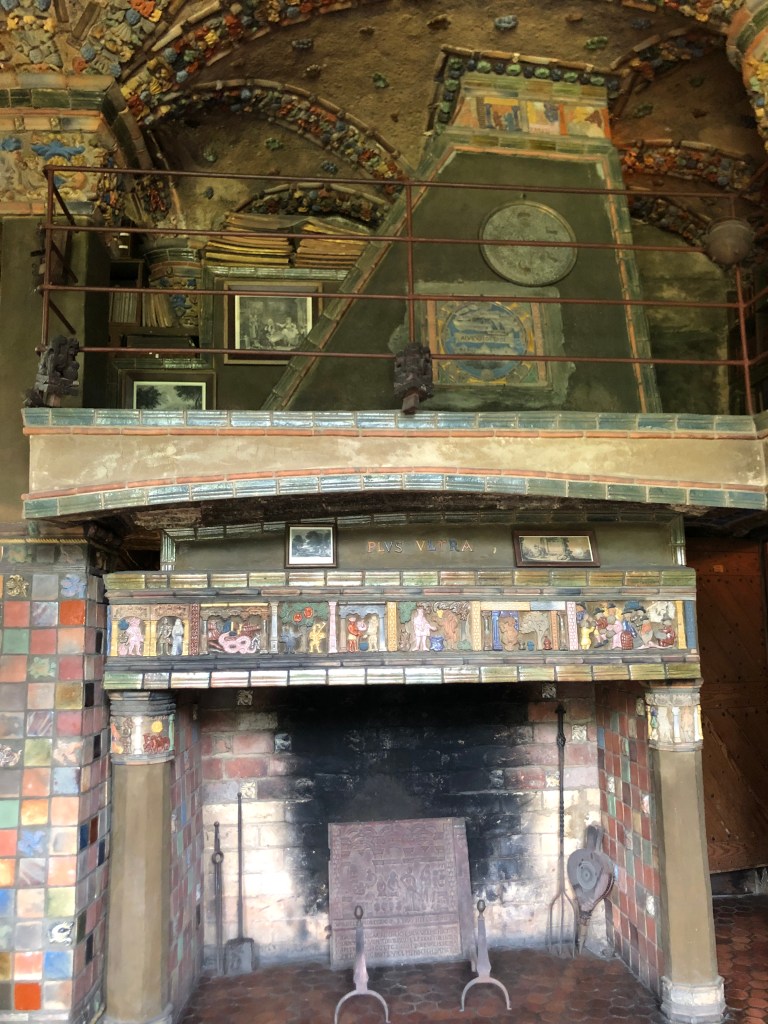
And…tiles. Many of the tiles are Mercer’s own design, brightly colored scenes, often with narratives. The narratives are sometimes scenes of everyday life, others drawn from history. The tiles are EVERYWHERE… set into walls, fireplaces, and ceilings. Even the bathrooms are decorated with tiles!
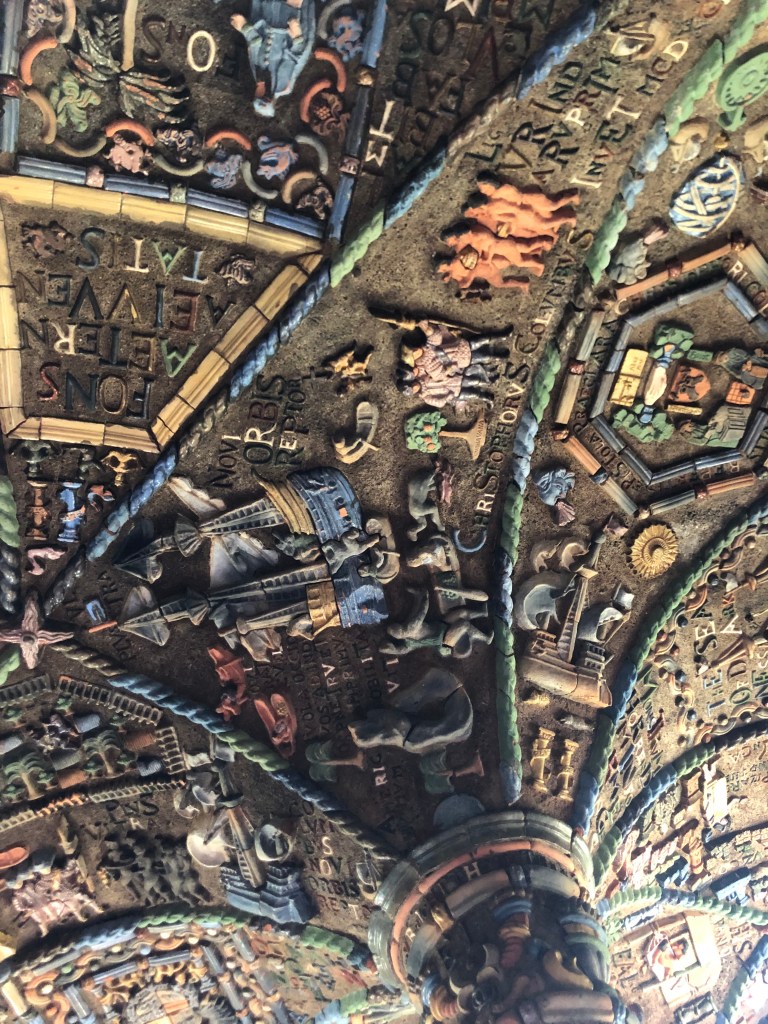
The room above is dedicated to the theme of Christopher Columbus’ voyage to the New World. The vaulted ceiling is covered with tiles and ceramic figures portraying the ships, the sailors, and the Native Americans that they encountered.
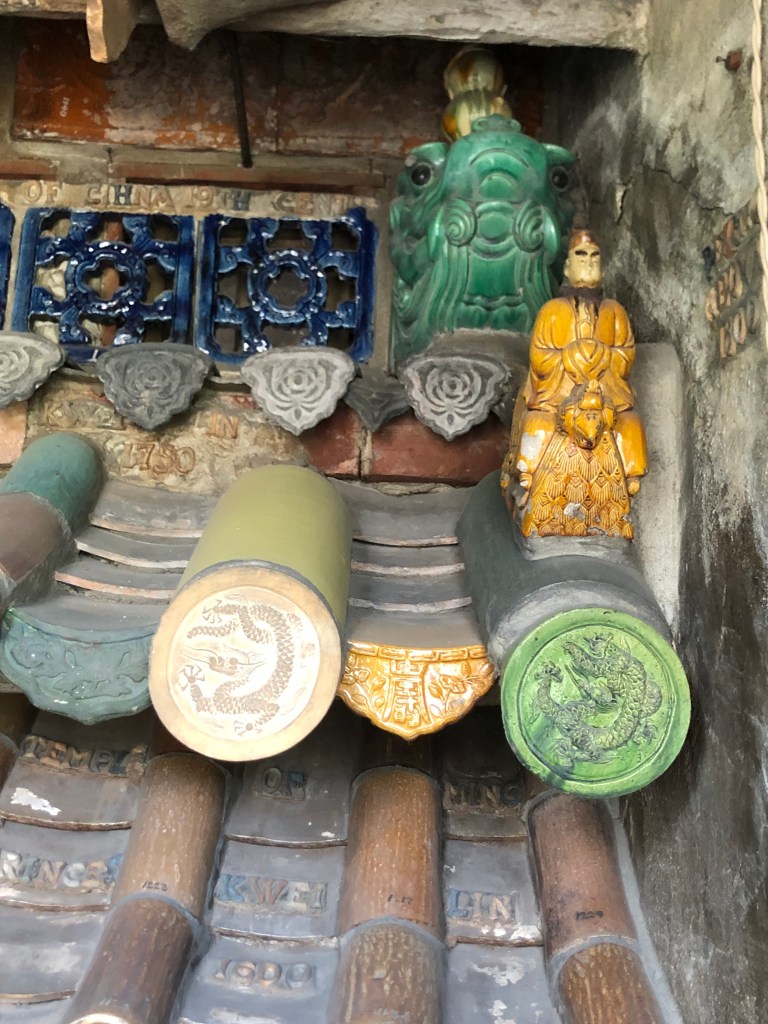
Mercer’s home also displays his collection of historic tiles, including Dutch, Spanish, Chinese and Persian tiles.
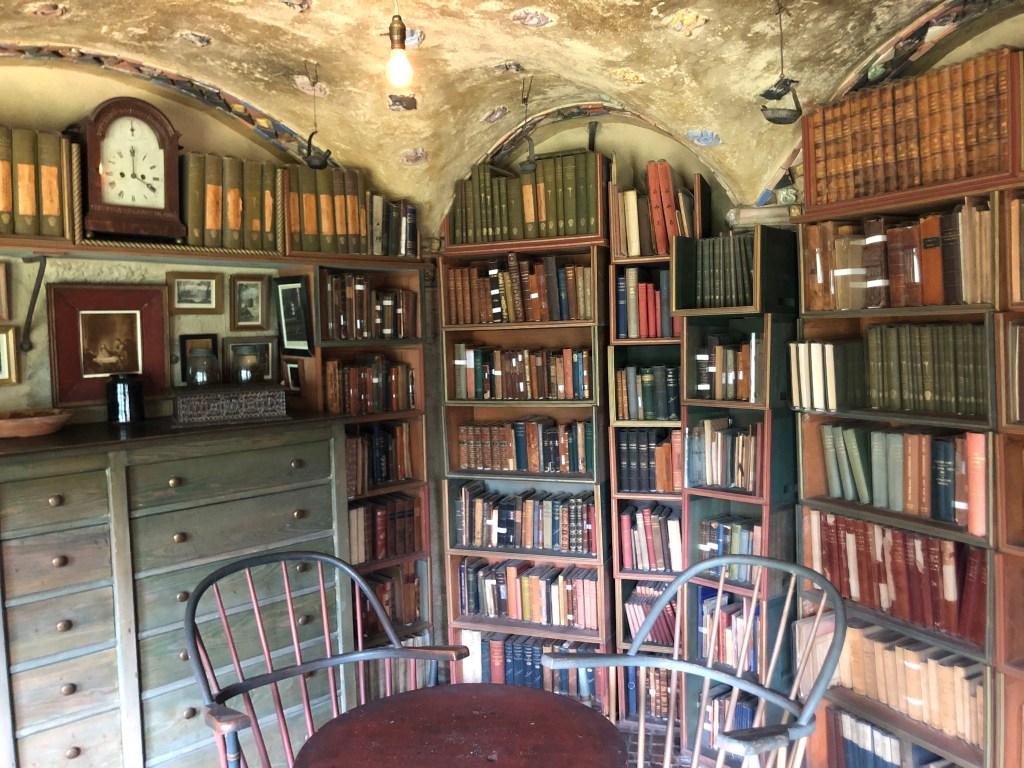
Mercer owned almost 6,000 books, many of which you can see displayed around the home.
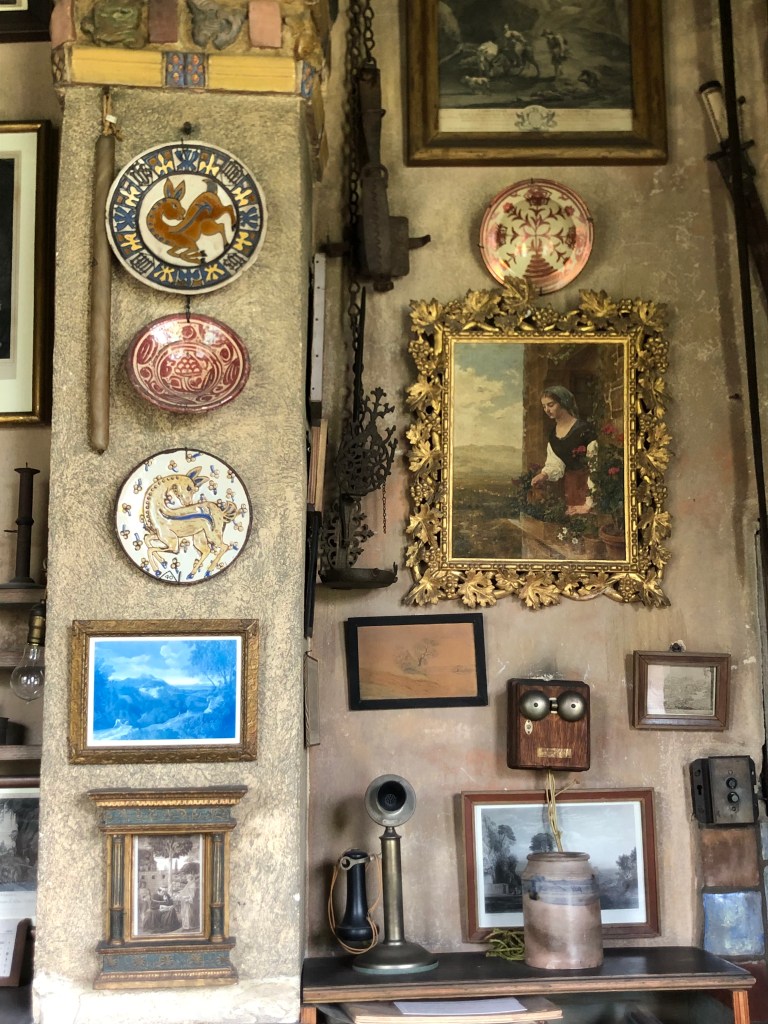
You can also see the many paintings, prints, and other artifacts that Mercer collected during his lifetime.
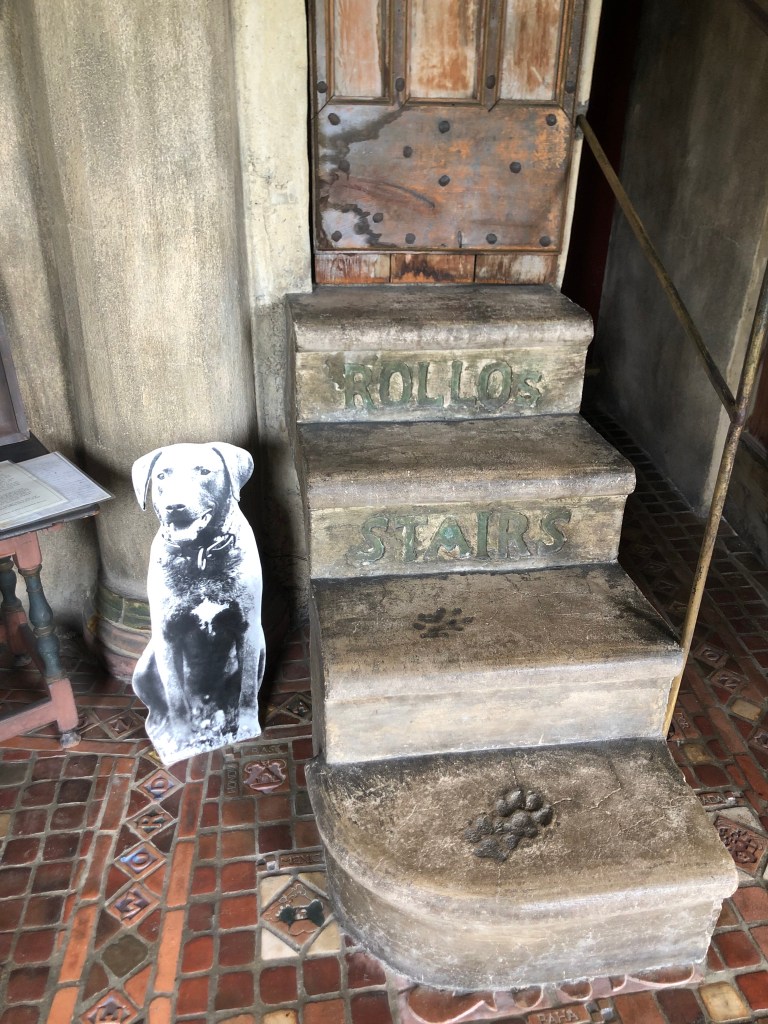
Walking around the house, you really get a sense of Mercer’s offbeat personality. This staircase immortalizes his dog, Rollo, whose pawprints are preserved in the concrete.
While the “castle” draws on the traditions of the past, it’s also quite modern for its time. It’s constructed from poured concrete. It was also equipped with the latest conveniences, featuring numerous bathrooms, an elevator, an intercom and telephones!
Mercer died in 1930, leaving his home to be a museum of tiles and prints. A visit to Fonthill gives us a glimpse into his unique personality and creative process. The museum gives regularly scheduled tours of the building…if you have the chance, visit! It’s a fun and eye-opening experience!


 JoAnn's Imagined Past